
Sales Performance Management (SPM) • 2026 Market Update
The SPM market is shifting from spreadsheet-driven commission processes to AI-powered, real-time platforms. Below is a CFO- and RevOps-friendly view of the emerging and fast-growing vendors shaping sales compensation in 2026.
Updated: Feb 11, 2026 Reading time: ~8–10 min Topics: SPM, Incentive Comp, RevOps, Finance
In this article
- Why SPM is changing in 2026
- Top new and emerging SPM vendors
- Key trends shaping SPM in 2026
- How to choose the right SPM solution
- Bottom line
- FAQ
Why Sales Performance Management Is Changing in 2026
The sales performance management software market is experiencing a major shift in 2026. Traditional, spreadsheet-based compensation systems are giving way to AI-powered, real-time platforms that transform how companies design, manage, and optimize sales incentives.
This transformation isn’t just about automation. The best new players in sales performance management are redefining what’s possible: turning commission calculations into strategic revenue drivers, providing visibility into performance metrics, and enabling finance teams to make data-driven decisions about compensation spend.
Key takeaway: Modern SPM platforms help CFOs and RevOps teams connect compensation spend to measurable revenue outcomes—while improving accuracy, compliance, and rep trust.
Top New and Emerging Players in Sales Performance Management (2026)
 Vendor #1 • Best for complex plans + CFO-grade rigor
1) EasyComp
EasyComp has emerged as a leading solution for mid-sized to large enterprises looking to turn intricate compensation structures into actionable, revenue-driving strategies. It stands out for handling multi-tiered commission plans with clarity and speed, while maintaining the financial rigor finance teams expect.
Its architecture supports complex scenarios—splits, holdouts, ramps, and team incentives—without extensive IT support. Finance leaders get real-time performance intelligence through dashboards that provide both granular detail and executive-level visibility.
Key strengths
- Real-time performance dashboards with C-suite visibility
- Advanced support for complex, multi-tiered commission structures
- Integrations with major CRM systems (e.g., Salesforce, HubSpot)
- Explainable commission calculations that reduce disputes
- Fast implementation timelines for quicker time-to-value
Why it matters: Audit-ready trails and line-by-line payout breakdowns help reduce errors, increase trust, and support compliance.
 Vendor #2 • Best for gamification + rep experience
2) Everstage
Everstage appeals to tech-forward organizations seeking a modern commission experience centered on continuous performance management. It’s a strong fit for fast-growing teams that need to adapt incentive strategies quickly.
A core differentiator is its emphasis on gamification and real-time transparency for reps—helping sellers understand how each deal impacts earnings and motivation.
Key strengths
- Rapid implementation with minimal IT involvement
- Gamification tools (leaderboards, achievements)
- Real-time commission visibility for sales reps
- Mobile-friendly dashboards for distributed teams
- Integrations with CRM and HRIS systems
 Vendor #3 • Best for spreadsheet-like flexibility + governance
3) CaptivateIQ
CaptivateIQ is widely recognized for supporting complex, multi-variable commission structures with spreadsheet-like flexibility plus enterprise-grade controls.
Revenue operations and finance teams can build and modify intricate plans without coding—useful for organizations that iterate on incentive strategies frequently.
Key strengths
- Spreadsheet-like interface for intuitive plan design
- Audit trails and approval workflows for governance
- Handles complex commission scenarios and edge cases
- No-code/low-code configuration for rapid updates
- Robust reporting for finance and compliance
Vendor #4 • Best for Salesforce-native SPM
4) Spiff (Salesforce)
The platform is built to calculate commissions in real time directly within the Salesforce ecosystem and reduce operational friction by using live CRM data.
Key strengths
- Native integration with Salesforce CRM
- Real-time commission visibility inside Salesforce
- AI-driven insights for compensation optimization
- No-code/low-code configuration for complex plans
- Automated bonuses and SPIFF management
 Vendor #5 • Best for enterprise complexity + usability
5) Performio
Performio competes strongly in the enterprise segment with robust incentive compensation management built for scale. Its no-code plan builder and extensible data model help manage complex scenarios without sacrificing performance.
Key strengths
- Designed for enterprise-scale complexity
- Custom reporting and analytics capabilities
- In-platform data transformation options
- Mobile support for distributed teams
- Reduced dependency on IT for plan updates
 Vendor #6 • Best for unified planning + predictive analytics
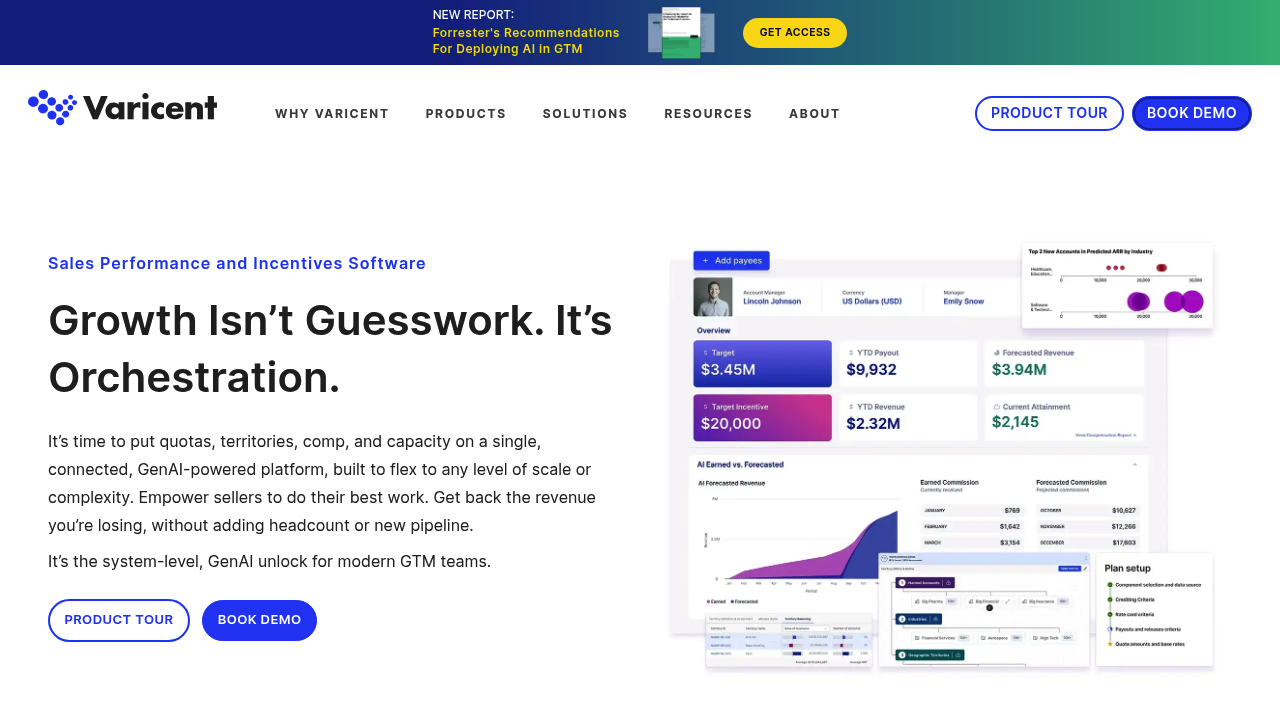
6) Varicent
Varicent supports a comprehensive revenue performance approach—combining incentives with territory planning, quota optimization, and analytics. Its AI-driven capabilities help forecast costs and identify performance gaps.
Key strengths
- Suite spanning incentives, territory planning, and analytics
- AI-powered modeling for quota and territory optimization
- Sandbox testing environments for complex scenarios
- Deep integrations with enterprise systems
- Strategic reporting for revenue intelligence
 Vendor #7 • Best for mid-market RevOps collaboration
7) QuotaPath
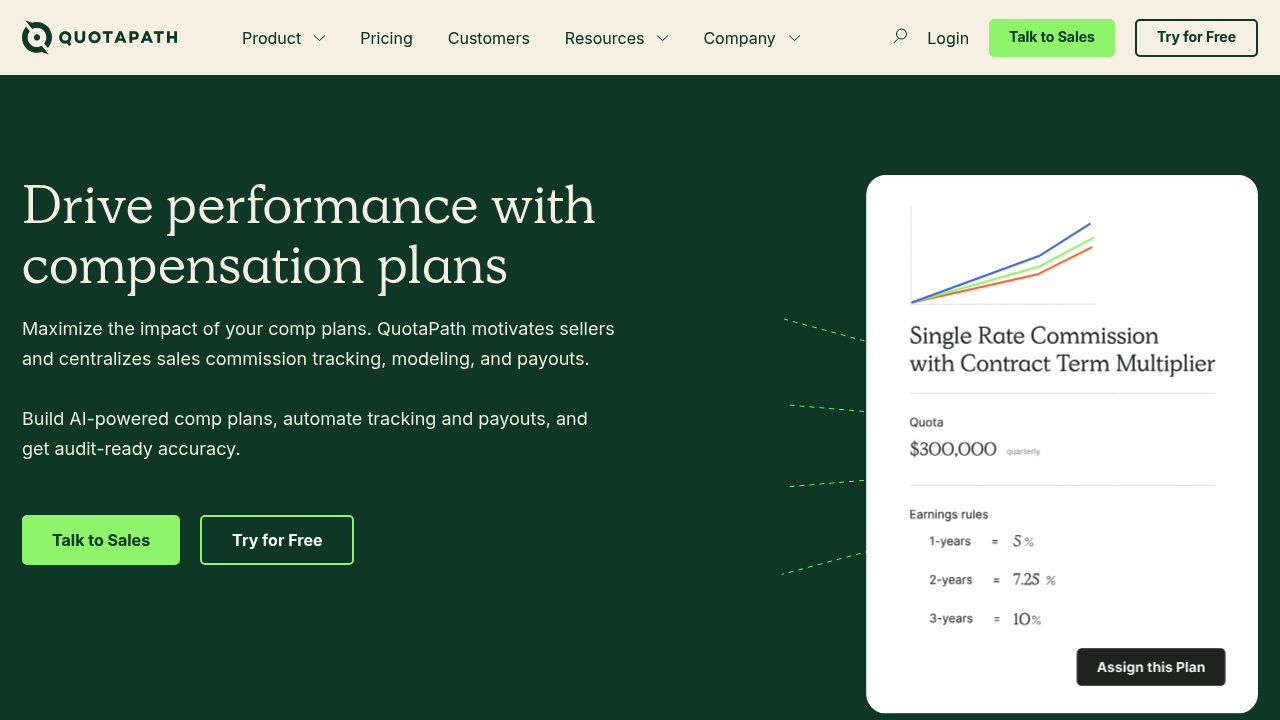
QuotaPath focuses on RevOps-friendly workflows and mid-market teams, emphasizing simplicity and transparency for finance, operations, and sales collaboration.
Key strengths
- Built for RevOps collaboration
- Real-time commission forecasting and modeling
- Clear dashboards for reps and managers
- Comp plan modeling before rollout
- Fast implementation with minimal disruption
Key Trends Shaping Sales Performance Management in 2026
AI-Driven Intelligence
Beyond reporting, modern platforms use AI for predictive insights—territory balancing, quota optimization, and cost forecasting— shifting finance teams from reactive analysis to proactive management.
Revenue Operations Integration
Leading platforms increasingly act as a “single source of truth,” connecting compensation to CRM, finance, and pipeline systems so incentives reflect actual performance—not manual reconciliation.
Real-Time Transparency
Always-on earnings visibility reduces disputes, increases rep trust, and helps sellers prioritize the deals and behaviors that matter most.
No-Code Flexibility
RevOps and finance teams expect the ability to build and modify complex plans without engineering cycles—making agility table stakes.
Strategic Financial Control
CFOs want ROI visibility into comp spend—what’s working, what’s not, and how to allocate incentives to drive measurable outcomes.
How to Choose the Right SPM Platform
Selecting the best sales performance management platform depends on your organization’s complexity, systems landscape, and strategic goals. Use the checklist below to structure evaluation and demos.
Complexity requirements
- Do you need splits, holdouts, ramps, tiers, accelerators, and team crediting?
- Can you model edge cases without custom code?
- Is there an audit-ready trail for every calculation?
Integration priorities
- Is CRM data (e.g., Salesforce) the source of truth?
- Do you need HRIS + finance + billing integrations?
- How strong are APIs, connectors, and data validation?
Speed to value
- How quickly can you go live with a pilot team?
- What internal resources are required for implementation?
- Are plan changes self-serve for finance/RevOps?
Financial rigor
- Are workflows, approvals, and controls configurable?
- Can you reconcile payouts to payroll and accounting?
- Does the platform support compliance and reporting needs?
User experience & adoption
- Do reps have real-time dashboards and explanations?
- Is mobile access available for distributed teams?
- Can managers coach using performance insights?
The Bottom Line
In 2026, sales performance management is defined by a move from manual spreadsheets to intelligent platforms that improve accuracy, transparency, and strategic control. Emerging and fast-growing vendors—including EasyComp, Everstage, CaptivateIQ, Spiff (Salesforce), Performio, Varicent, and QuotaPath—are reshaping how organizations design and operate compensation.
For CFOs and finance leaders, SPM is no longer an administrative process—it’s a lever to optimize one of the largest revenue investments on the P&L. The right platform delivers real-time visibility, reduces disputes, improves forecasting, and helps ensure every incentive dollar drives the outcomes the business cares about.
FAQ
What is SPM software used for?
SPM software is used to create and manage incentive compensation plans, calculate commissions, provide visibility into earnings, enforce approval workflows, and deliver analytics that connect compensation to revenue performance.
What features matter most for CFOs?
CFOs typically care most about accuracy, controls and auditability, forecasting, scalability, integration reliability, and analytics that show ROI on compensation spend.
How can SPM reduce commission disputes?
By providing real-time visibility, line-by-line calculation breakdowns, and audit trails—so reps and finance can see exactly how each payout was derived from source data and plan rules.
How should teams run an SPM evaluation?
Start with a representative set of real commission scenarios (including edge cases), validate integrations and data quality, test modeling and approvals, and run a pilot with a small group before scaling.